Powder coating or anodizing? Choosing the right surface treatment for aluminium
5 min readPowder CoatingSurface TreatmentArchitecture
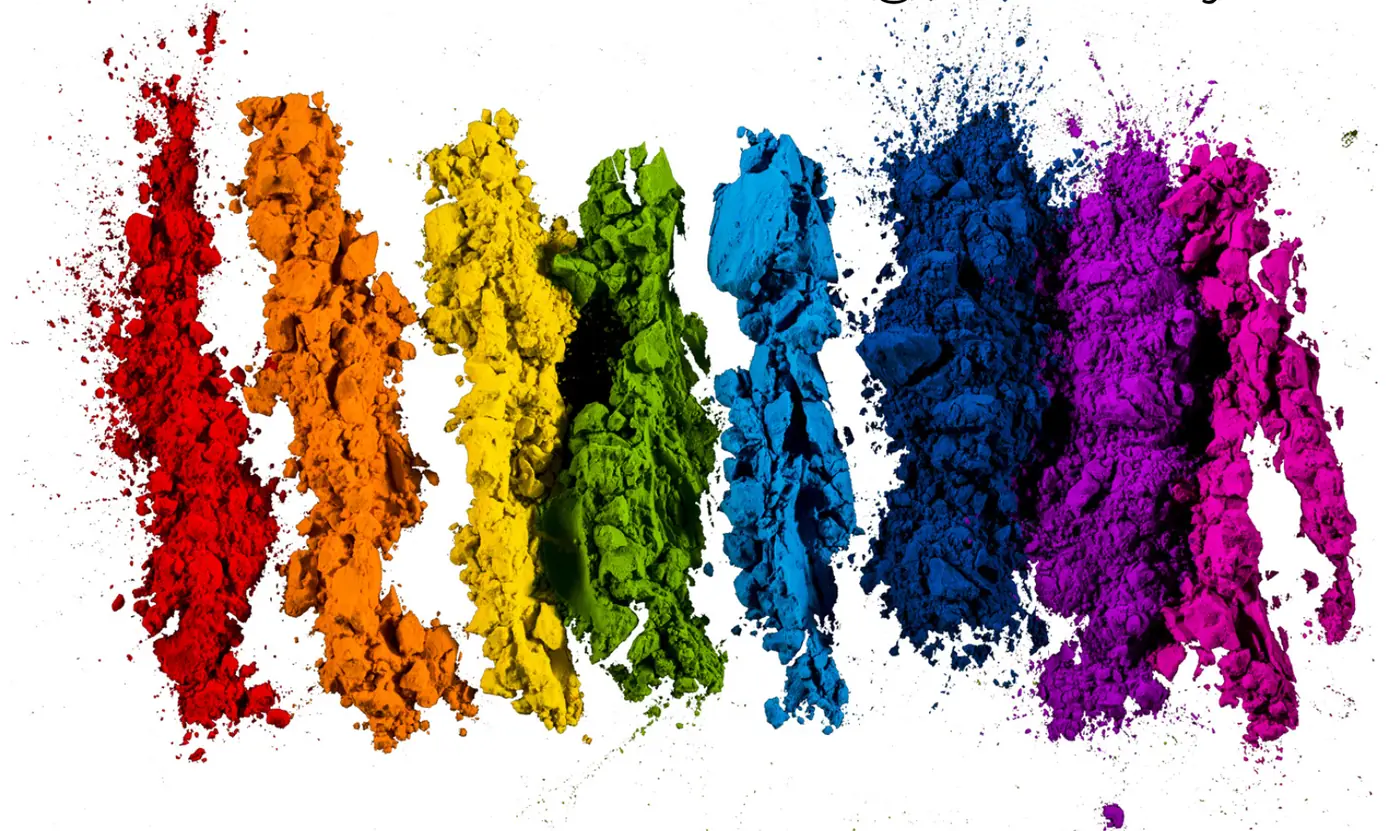
The surface is the profile’s identity. However precise the raw profile leaving the press, the face the project shows on site — its color, its texture, how it holds up over the years — is decided at surface treatment. In aluminium there are two serious candidates for that decision: electrostatic powder coating and anodizing. Applied properly, both serve for decades; but they answer different questions. This article puts them on the same table and reduces the decision to five concrete criteria.
Powder coating: freedom of color, electrostatic discipline
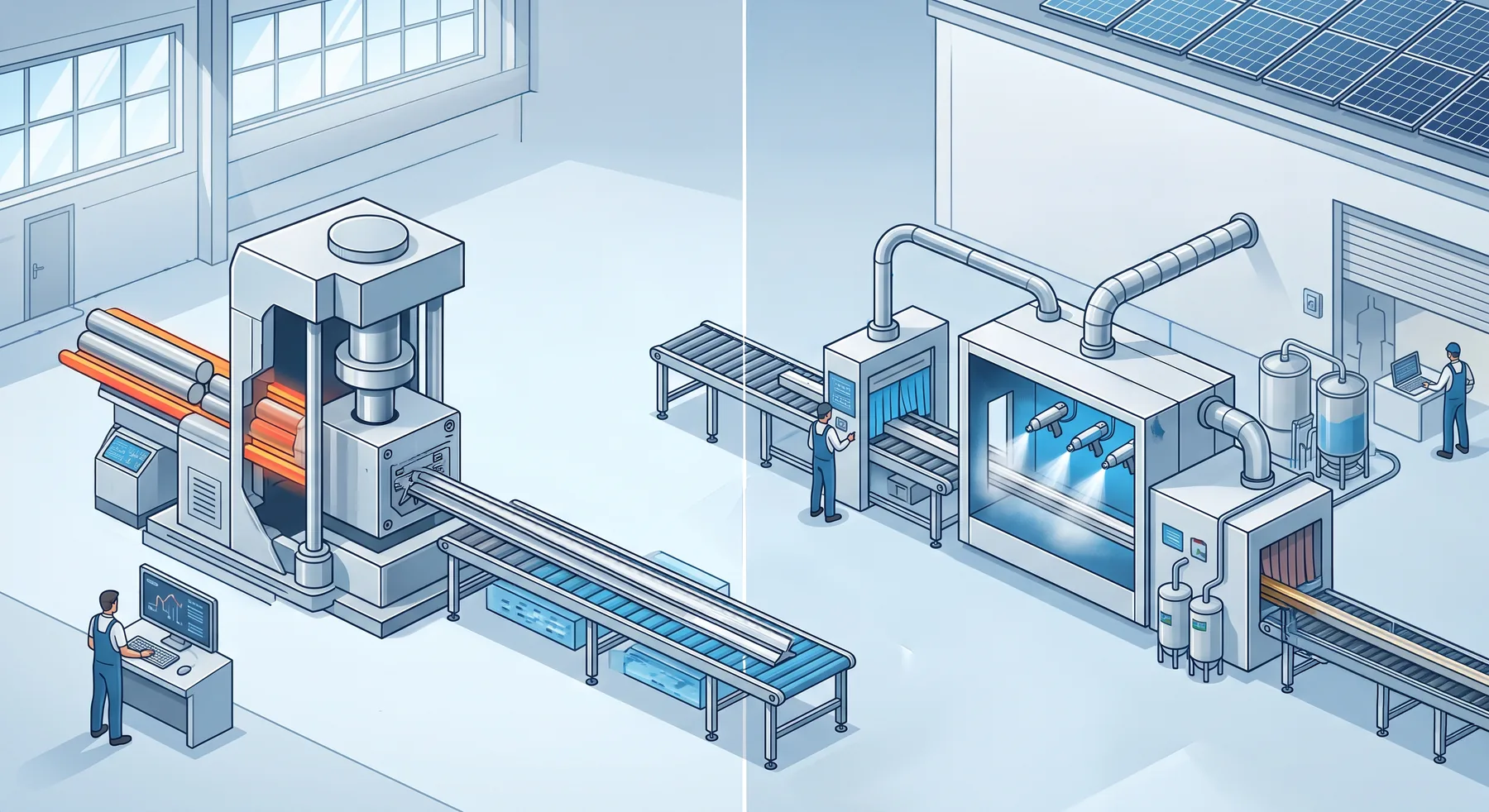
In electrostatic powder coating an electrically charged polyester powder is sprayed onto the grounded profile; the part is cured in an oven at 180–200 °C, and the powder forms a continuous film chemically bonded to the profile. Typical film thickness is 60–80 µm — invisible to the naked eye, but a real barrier between the profile and its environment.
Color is powder coating’s strongest card. The entire RAL range; matte, satin, gloss and textured surfaces; wood-effect sublimation patterns — all of it comes off the same line. There is no gap in interpretation between the color in the architect’s catalog and the color of the profile that reaches the site. Because there is no solvent, there are no VOC emissions; powder that does not adhere during spraying is recovered and reused.
Quality, on the other hand, depends largely on the discipline of the line: correct preparation of the surface before chromating, uniform film thickness, no drift in oven time. On our electrostatic powder coating line the process runs on a “Power and Free” conveyor system that coats single-piece profiles up to 9.2 meters under full automation; annual capacity is 7,500 tonnes.
Anodizing: not a coating, a conversion
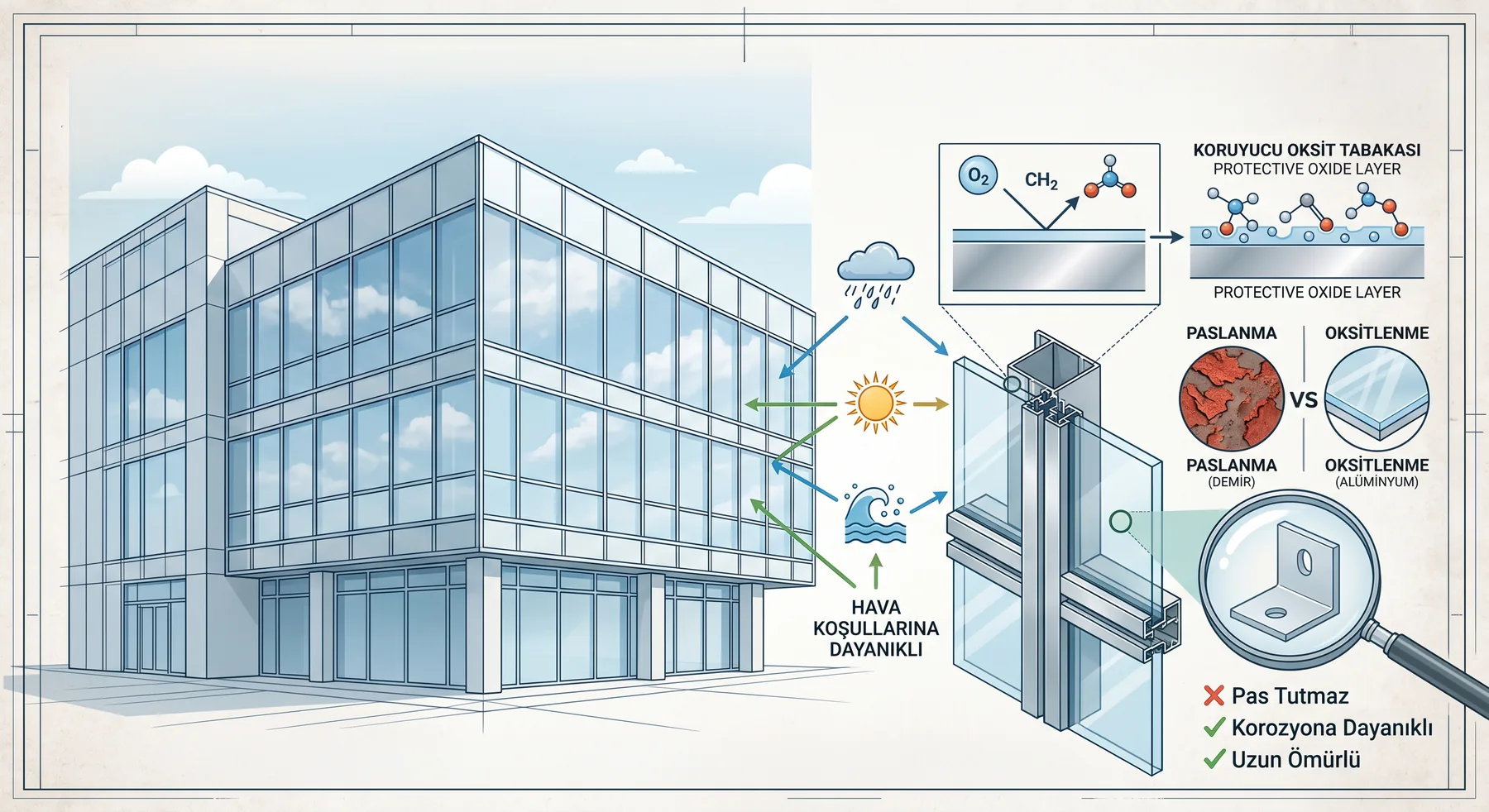
Unlike powder coating, anodizing (anodic oxidation) adds nothing to the profile — it converts the aluminium’s own surface, electrochemically and under control, into an oxide. In an electrolyte bath the outer layer of the profile becomes a hard, porous oxide layer 5–25 µm thick, grown out of the metal itself; the pores can be colored, then closed and sealed.
The result has a different character from paint. It does not cover the texture of the metal, it shows it: an anodized profile still looks like metal, because the surface still is metal. Since the layer is part of the profile, it does not peel or blister, and its scratch resistance is higher than a paint film’s. In return the palette is narrow — natural, bronze and black tones, plus a limited number of colors — and tone can vary between billet batches.
Five criteria, compared
| Criterion | Powder coating | Anodizing |
|---|---|---|
| Color options | Full RAL, matte/satin/gloss/texture, wood effect | Narrow palette, mainly natural, bronze, black |
| Corrosion resistance | High — film barrier, marine-climate classes available | High — the oxide layer is the metal itself |
| Scratch and wear | Good; a deep scratch can breach the film | Very good; the layer does not peel |
| Repair | Local touch-up possible on site | Local repair is not practical |
| Tone consistency | 100% repeatable between batches | Risk of tone variation between batches |
On cost the two processes trade places depending on the scale of the project and the class specified; thin-film anodizing and standard powder coating sit in a similar band, while thick-film anodizing and marine-climate powder coating separate upward. The decision should be read from the project’s expected service life, not from a price list.
Which one, for which project?
The practical rule is this: if color is part of the project’s language, powder coating; if the metal itself is part of the project’s language, anodizing.
In architectural work — facade systems, windows and doors, pergolas, roof and terrace systems — the specification usually calls for a particular RAL code and a particular gloss level, and that is powder coating’s ground. On facades facing hard sun, textured surfaces hide fingerprints and micro-scratches; wood-effect sublimation gives the warmth of timber without its maintenance burden.
Where mechanical contact is constant and the surface is open to hard use — machine bodies, slides, electronic heat sinks, marine hardware — anodizing’s wear resistance and metallic texture come out ahead. Indoors, where the aesthetic of metal is itself the point, natural anodizing offers a depth that paint cannot imitate.
Projects that combine the two are not rare either: in the same building, visible facade profiles can run powder coated while internal mechanism parts run anodized. The right question is not “which is better?” but “what will this part meet on site?”.
Let’s make the decision together
Surface treatment is not a line on an order form; it is a decision taken today about what the project will look like twenty years from now. We produce your profiles under one roof from extrusion to coated, packed pallet — and we read every step, from alloy selection to film thickness, against your project’s specification. If you would like to settle the right surface treatment for your project together, we are ready for your request.
Let’s start with a cross-section.
A DWG, a DXF or a dimensioned sketch is enough. Add your alloy, temper and surface treatment preference, and we will come back with die status and lead time.