Manufacturing precision in architectural profiles: extrusion and coating
4 min readExtrusionPowder CoatingArchitecture
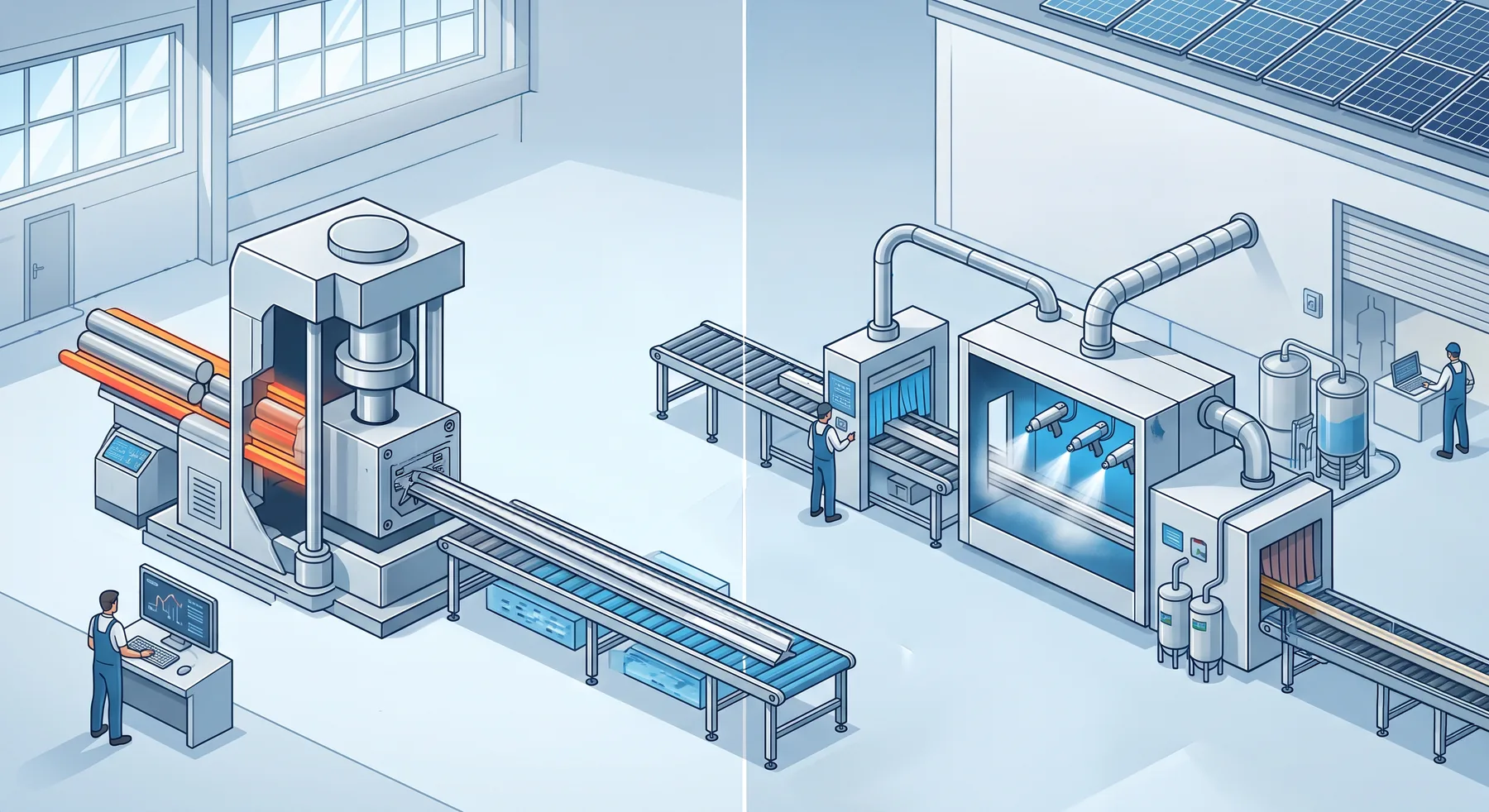
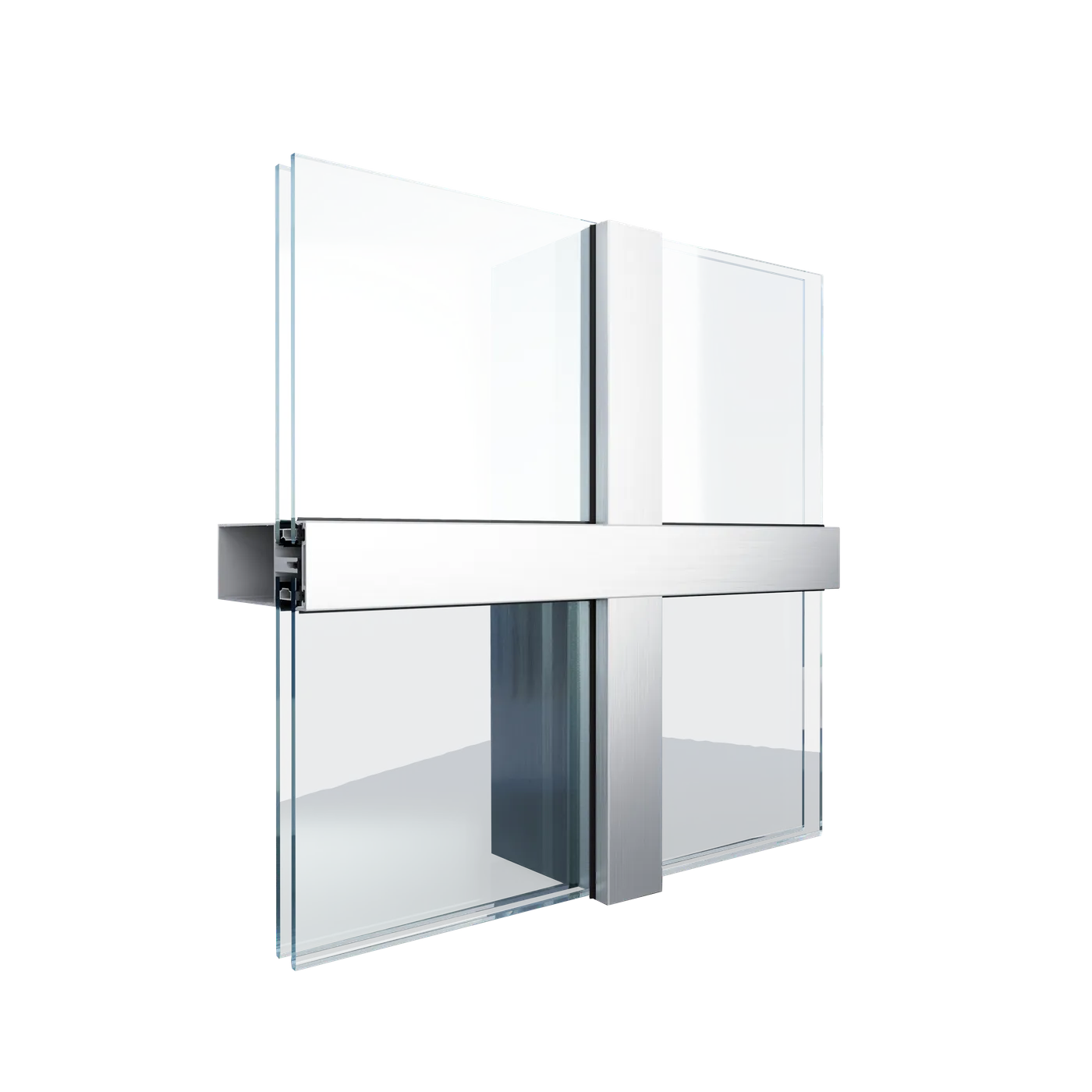
In architectural systems — from moving systems to office partitions, from sliding systems to facade systems — the performance of the aluminium profiles used depends on manufacturing precision. The wind-load figure written into the specification, the insulation performance printed in the catalog, the ease of assembly expected on site: all of them rest on the tolerance of the profile’s section. An architectural system is won or lost not where it is designed, but where it leaves the press.
Tolerance is not one measurement but three separate performances
Wind-load resistance, thermal barrier assembly and a flawless joint all require the profile sections to be extruded within tolerance. These three expectations look at the same dimension but ask different questions.
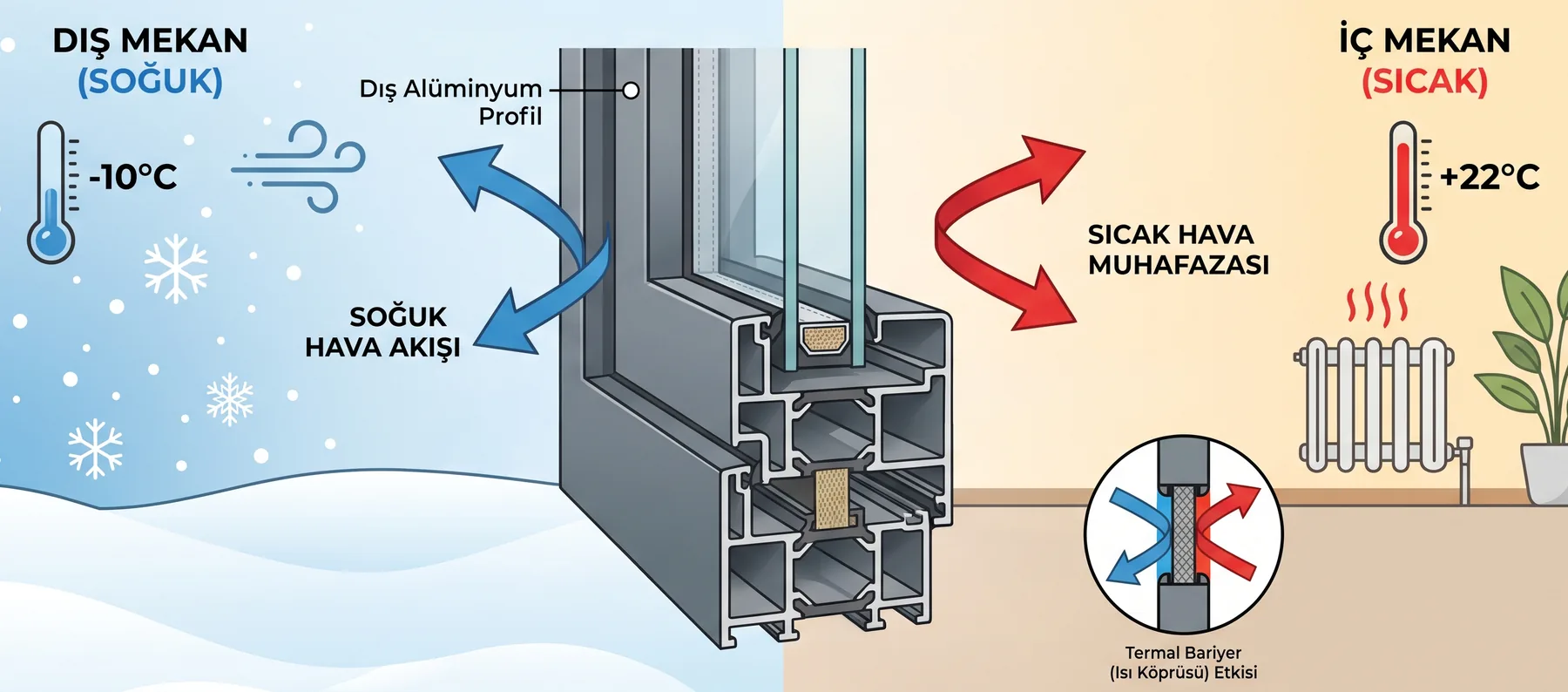
Wind load asks about the geometry of the section and its wall thickness: the calculated moment of inertia only becomes real if the profile comes out in the section it was drawn in. Barrier assembly asks about the repeatability, to within microns, of the channel the polyamide strip seats into — if the channel drifts, the strip either binds or leaves a gap, and both cost insulation performance. Assembly asks about straightness along the length of the profile; the fine misalignment visible at a joint is usually the result not of the section but of the cooling and stretching discipline after the press.
A fourth follows: the surface quality of the profiles produced has to be protected against the elements. A correct section that leaves for site unprotected gives back, within the first year, the precision it was made with.
Every architectural detail has its own die
Different architectural details have different die geometries. A slender window profile and a facade mullion carrying high loads may belong to the same family, but in terms of die design, extrusion speed and cooling regime they are two different jobs.
In a thin-walled, multi-chamber window section, the risk is that the metal does not fill the die’s narrow channels evenly. In a heavy facade mullion, the risk is the reverse: the mass cooling at different rates along its length and leaving twist in the profile. Producing both correctly in the same plant depends not on a single press force but on a production recipe that changes with the section.
Two presses, one range
In our integrated plant, our 5″ (Ø127 mm) and 7″ (Ø178 mm) aluminium extrusion presses let us produce, with minimum tolerance, across a wide range — from finely detailed profiles made for narrow sightlines to heavy profiles that have to carry high static loads.
| 5″ line | 7″ line | |
|---|---|---|
| Billet diameter | Ø127 mm | Ø178 mm |
| Daily output | 8–10 t/24 h | 12–18 t/24 h |
| Typical work | Fine window sections, interior profiles | Facade mullions, high-load sections |
Total profile capacity is 8,400 t/year — 750 tonnes a month. Having both lines under one roof means a project’s slender and heavy sections need not be split between suppliers: the same alloy batch, the same quality record, the same shipment.
The surface is the second half of precision
The profile leaving the press is half the job. Our electrostatic powder coating line runs on world-leading Nordson technology; the fully automated “Power and Free” conveyor coats profiles up to 9.2 meters in a single piece. Annual coating capacity is 7,500 tonnes, and the full RAL range is available in matte, satin, gloss and textured finishes.
Single-piece coating matters more in architectural work than it sounds: when a long facade mullion is coated without a splice, the risk of a tone shift or a join mark along its length disappears. Which surface treatment suits which project is something we take up separately in our powder coating and anodizing comparison.
Every profile passes 50 inspection points before dispatch. Precision is not a claim but a recorded result.
Let us read your section together
Because every step from raw billet to palletized profile runs at the same address, we hold the balance between section tolerance and surface quality under a single responsibility. If you would like to work through the section, alloy and finish requirements of your architectural system with us, send us your enquiry.

Let’s start with a cross-section.
A DWG, a DXF or a dimensioned sketch is enough. Add your alloy, temper and surface treatment preference, and we will come back with die status and lead time.